SuperFauna Archive
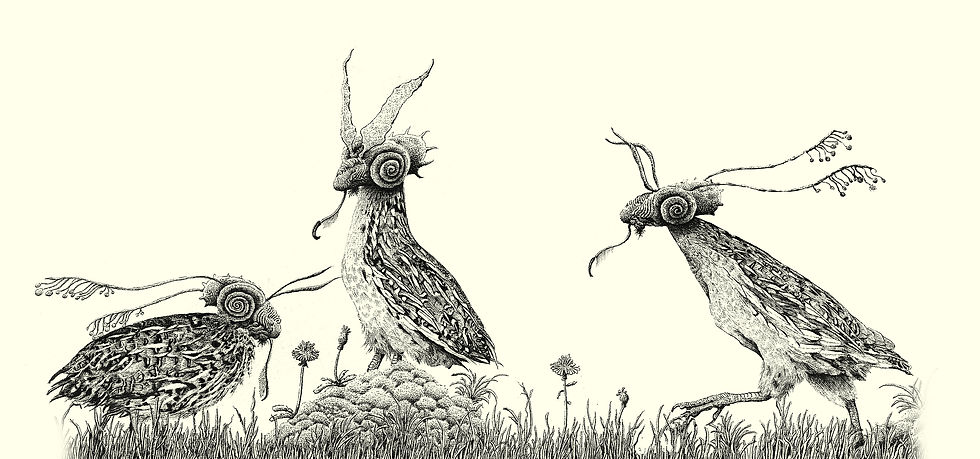
tap to view closeups
Common Buzztongue
Coturnix linguafibrosa
Population: between 70-90 indviduals
Size: 16-20cm long, 32-36cm wingspan
Diet: various airborne microbes and spores
Call: range from shrill chirps to droning buzzing, very similar in timbre to members of the Orthoptera order
Threat Level: Low
Corturnix linguafibrosa has a highly specialised adaptation for feeding, filtering microorganisms out of the Zone’s highly oxygenated air using its long, tongue like proboscis. This appendage is equipped with fine follicles which secrete a sticky oil, trapping organisms within the strands which are then ingested through the Buzztongue’s toothless, disk-shaped mouth. This oral disk is superficially similar to those found within the Petromyzon genus of jawless fish, though seem to function via suction rather than sharp-toothed rasping. This makes Coturnix linguafibrosa the only known terrestrial fauna capable of this typically aquatic style of filter feeding.
The other key defining feature of this species is their ability to produce a series of insect-like buzzes and chirps, which are not unlike those heard from grasshoppers and crickets. Unlike these aforementioned insects, these sounds do not appear to be produced from rubbing but are instead facilitated through chitinous flaps within hollow chambers located somewhere in the SuperFauna’s head cavity. Similar to Phasianus fistulaemagus, these flaps seem to be vibrated via the channelling of air from the lungs. While fairly nimble on their feet, their relatively slow take-off speed makes them ripe for predation, and appear to be a favoured prey species for Falco stridensiphonus in particular.